Introduction
Premature ejaculation (PE) is a common sexual concern, yet many men hesitate to discuss it. It can involve ejaculating sooner than desired, difficulty delaying ejaculation and distress for one or both partners. Occasional early ejaculation is not necessarily a disorder. Persistent difficulty that causes distress is worth discussing with a healthcare professional.
A useful approach is to replace embarrassment with curiosity. Sexual response is influenced by arousal, anxiety, relationship dynamics, learned patterns and physical factors. There is no single solution that works for every man.
Understand the Pattern
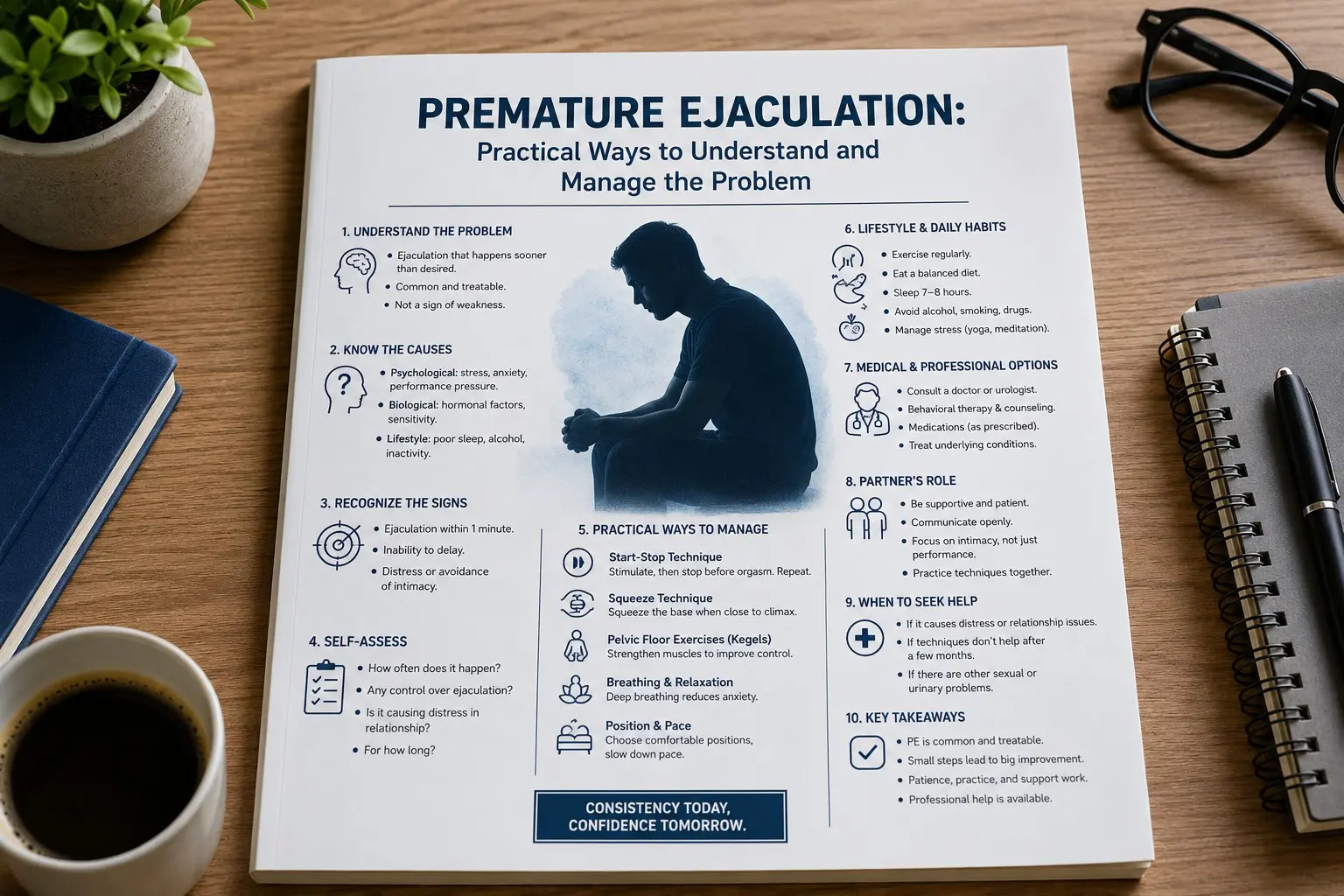
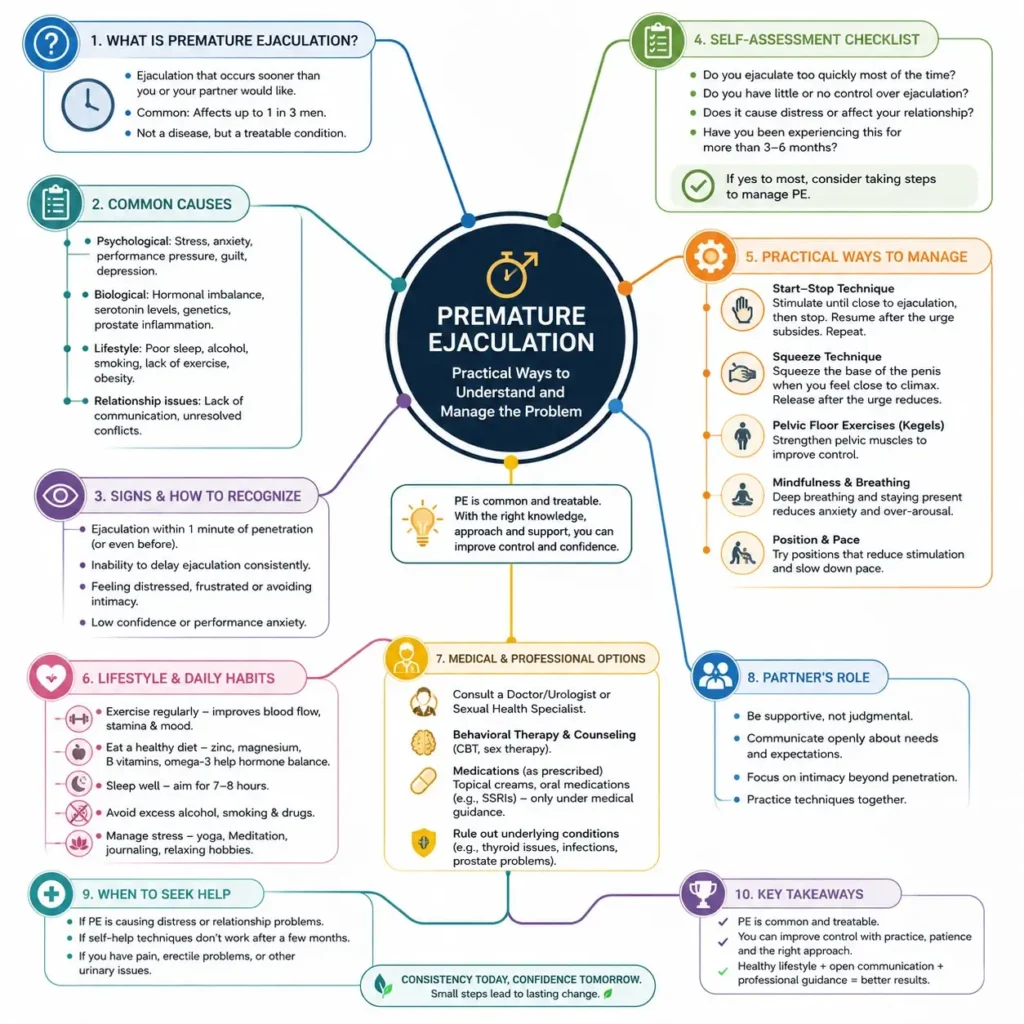
Notice when the problem happens. Is it present in most sexual encounters or only during periods of stress? Does it occur with a new partner, after a long period without sex, or when you feel pressured to perform? Tracking the context can help identify triggers and can provide useful information for a clinician or therapist.
Manage Performance Pressure
Anxiety can increase attention on performance and make it harder to stay relaxed. Slow breathing, reducing the expectation that sex must follow a fixed script and focusing on shared pleasure can reduce pressure. Partners can agree on pauses, changes in pace or other ways to stay connected without treating ejaculation as a failure.
Build Better Communication
A calm conversation outside the bedroom can be more productive than trying to solve the issue during sex. Explain what you experience without blaming yourself or your partner. Ask what feels comfortable and enjoyable for both of you. A supportive relationship can turn a private worry into a shared problem-solving exercise.
Learn Arousal Awareness
Some men benefit from learning to recognize the difference between rising arousal and the point at which ejaculation feels inevitable. Techniques used in sexual therapy may involve pausing stimulation, changing pace or using other structured approaches. These methods are best learned gradually and without turning every sexual experience into a performance test.
Consider Physical and Psychological Factors
PE can be associated with anxiety, relationship stress, erectile difficulties, hormonal or other health factors. If it is persistent or newly developed, a professional assessment can help identify contributing factors. Treatment options can include behavioral approaches, counseling and, in selected cases, medicines prescribed by a clinician.
Be Skeptical of Instant Claims
Products promising immediate ejaculation control deserve careful scrutiny. Supplements marketed for sexual performance may have limited evidence and can carry interaction or contamination risks. Avoid products that promise guaranteed results, claim to cure a sexual disorder or encourage you to ignore professional care.
A Wellness Routine Still Helps
Regular exercise, adequate sleep, stress management, healthy nutrition and avoiding excessive alcohol can support sexual wellbeing. These habits may not directly cure PE, but they can improve energy, confidence, mood and overall health. LongJack Plus products are presented as general wellness support and should not be positioned as treatment for premature ejaculation.
Premature ejaculation is a manageable sexual-health concern, not a measure of masculinity. Understanding the pattern, reducing pressure, communicating with a partner and seeking appropriate professional help can make a meaningful difference. If the problem is persistent or distressing, a qualified clinician or sexual-health professional can help you choose an evidence-based approach.
Do not make sex a test
Erectile dysfunction is common and treatable, but the right response depends on the cause. Build healthy lifestyle habits, communicate openly, review risk factors and seek medical guidance when problems persist. The goal is not simply a better erection; it is better overall health and a healthier sexual life.
When to seek professional help
Professional support is particularly useful when PE is persistent, causes significant distress, affects a relationship or appears alongside erection problems, pain or other sexual symptoms. A clinician can distinguish between a longstanding pattern and a newly developed change. Sexual-health counseling can also provide practical behavioral strategies without judgment.