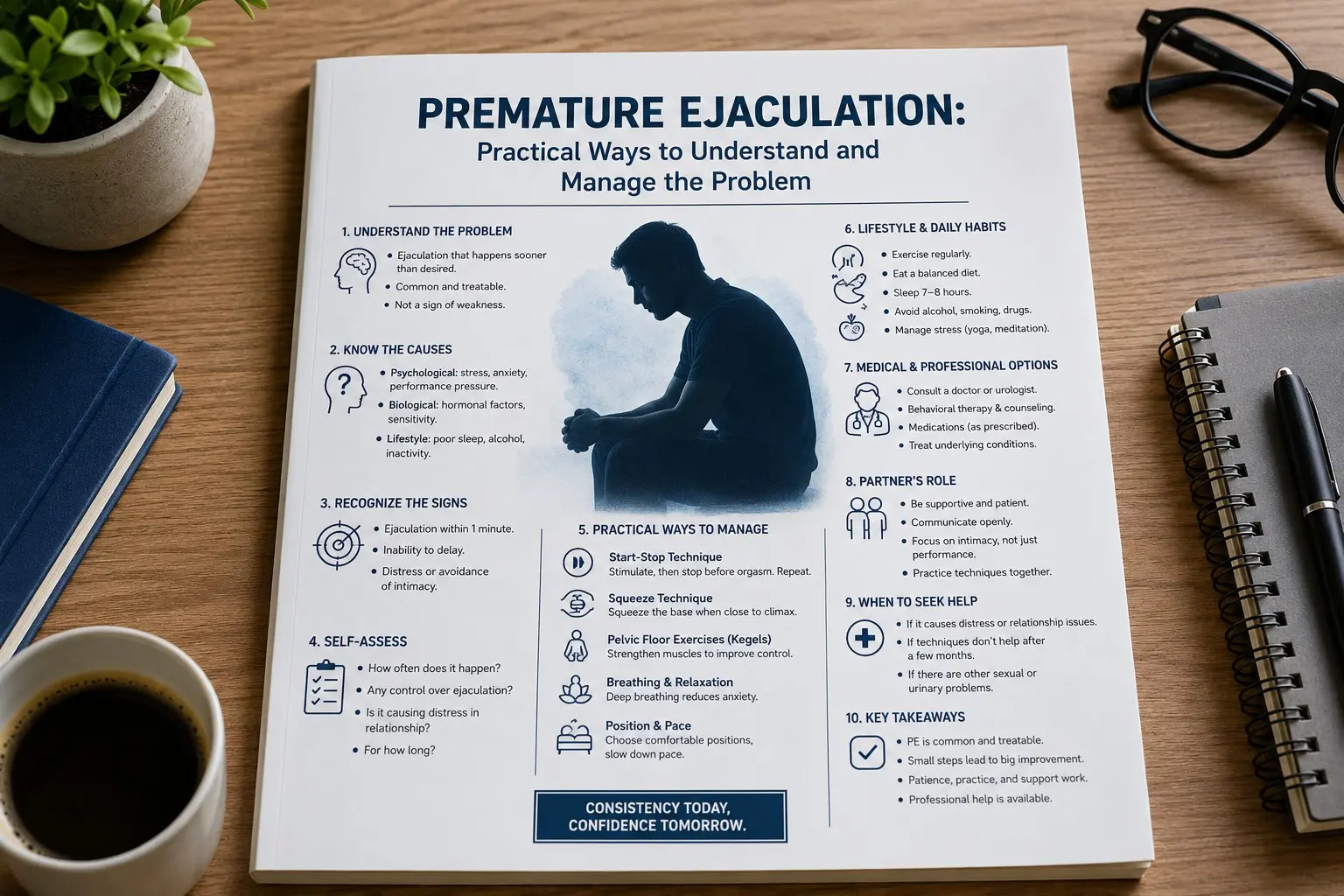
Introduction
Erectile dysfunction (ED) means difficulty getting or keeping an erection firm enough for sexual activity. Occasional erection changes can happen with stress, fatigue or alcohol, but persistent problems deserve attention. ED is not simply a matter of performance or confidence: it can be associated with cardiovascular, metabolic, neurological, hormonal, medication-related and psychological factors.
For men researching erectile dysfunction causes, the most useful message is simple: look beyond quick fixes. Improving general health can support sexual function, while persistent or new symptoms should be discussed with a qualified healthcare professional.

What Can Cause ED?
Erections depend on healthy blood vessels, nerves, hormones, psychological wellbeing and sexual stimulation. Conditions such as diabetes, high blood pressure and heart disease can affect the blood vessels and nerves involved in erections. Some medicines, smoking, excessive alcohol, obesity, stress, anxiety and relationship difficulties can also contribute. More than one factor may be present at the same time.
Why Cardiovascular Health Matters
The penis contains a dense network of blood vessels, so changes in vascular health can affect erection quality. Regular physical activity, healthy eating, weight management, smoking cessation and management of blood pressure, blood sugar and cholesterol are important parts of a broader prevention strategy. ED can sometimes be an early signal that a man should review his cardiovascular risk factors.
Lifestyle Steps That Support Erectile Health
Start with habits that improve overall health: exercise regularly, eat a balanced diet rich in plant foods, maintain a healthy weight, avoid smoking, moderate alcohol and protect sleep. Stress management also matters. These steps are not an instant treatment, but they create a healthier environment for sexual function and can improve several risk factors at once.
Psychological and Relationship Factors
Performance anxiety can create a cycle: worry affects arousal, an erection becomes less reliable, and the next sexual experience produces even more worry. Communication with a partner can reduce pressure. Counseling or sex therapy may help when anxiety, depression, relationship conflict or past experiences are contributing.
When Medical Evaluation Is Important
See a healthcare professional if erection problems are persistent, worsening, painful, associated with other symptoms, or causing significant distress. Evaluation may include a medical history, medication review, physical examination and selected laboratory tests depending on the situation. Do not assume that an online supplement is an adequate substitute for diagnosis.
Be Cautious With Herbal ED Products
The evidence for herbal products marketed specifically to treat ED is limited, and safety is a serious consideration. Some sexual-enhancement supplements have been found to contain undeclared drug ingredients. Products can also interact with prescription medicines. A transparent label and responsible marketing are important, but they do not replace individualized medical advice.
Where LongJack Plus Fits
LongJack Plus describes its products as general wellness options supporting daily energy, stamina, vitality and an active lifestyle. The website explicitly states that products are not intended to diagnose, treat, cure or prevent disease. That distinction is important: a wellness product should not be presented as a medical treatment for erectile dysfunction.
7. Review Medicines and Health Conditions
Low testosterone symptoms can overlap with many other conditions. Diabetes, obesity, sleep disorders, thyroid problems, medication effects and other health issues may contribute to fatigue or sexual changes. A clinician can decide whether testing is appropriate and interpret results in context rather than relying on an online symptom checklist.
Erectile dysfunction is common and treatable, but the right response depends on the cause. Build healthy lifestyle habits, communicate openly, review risk factors and seek medical guidance when problems persist. The goal is not simply a better erection; it is better overall health and a healthier sexual life.
A realistic definition of progress
Progress may mean more reliable erections, less anxiety, better fitness, improved sleep or greater comfort discussing sex with a partner. Those outcomes are more meaningful than comparing yourself with advertising claims. If symptoms remain persistent, medical evaluation is a practical step rather than a sign of failure.
Why quick fixes can be misleading
An online product can make an erection problem look like a simple deficiency that can be corrected with one ingredient. In reality, erectile function depends on several systems working together. A product that promises an instant or guaranteed result may distract from blood-pressure control, diabetes management, fitness, medication review or relationship support that could be more important.
Questions to ask during a health visit
Before an appointment, note when the erection problem started, how often it occurs, whether morning erections have changed, which medicines or supplements you use and whether there are other symptoms. Mention smoking, alcohol, sleep problems and major stressors. These details can help a clinician identify whether the problem is more likely to involve vascular, hormonal, medication-related or psychological factors.