Men’s wellness is closely connected with overall health. Energy levels, cardiovascular health, stress, sleep, physical activity and nutrition can all influence how you feel and function. For Indian adults looking to build healthier everyday habits, adding nutrient-dense foods such as nuts, dried fruits and selected natural ingredients can be a practical part of a balanced diet.
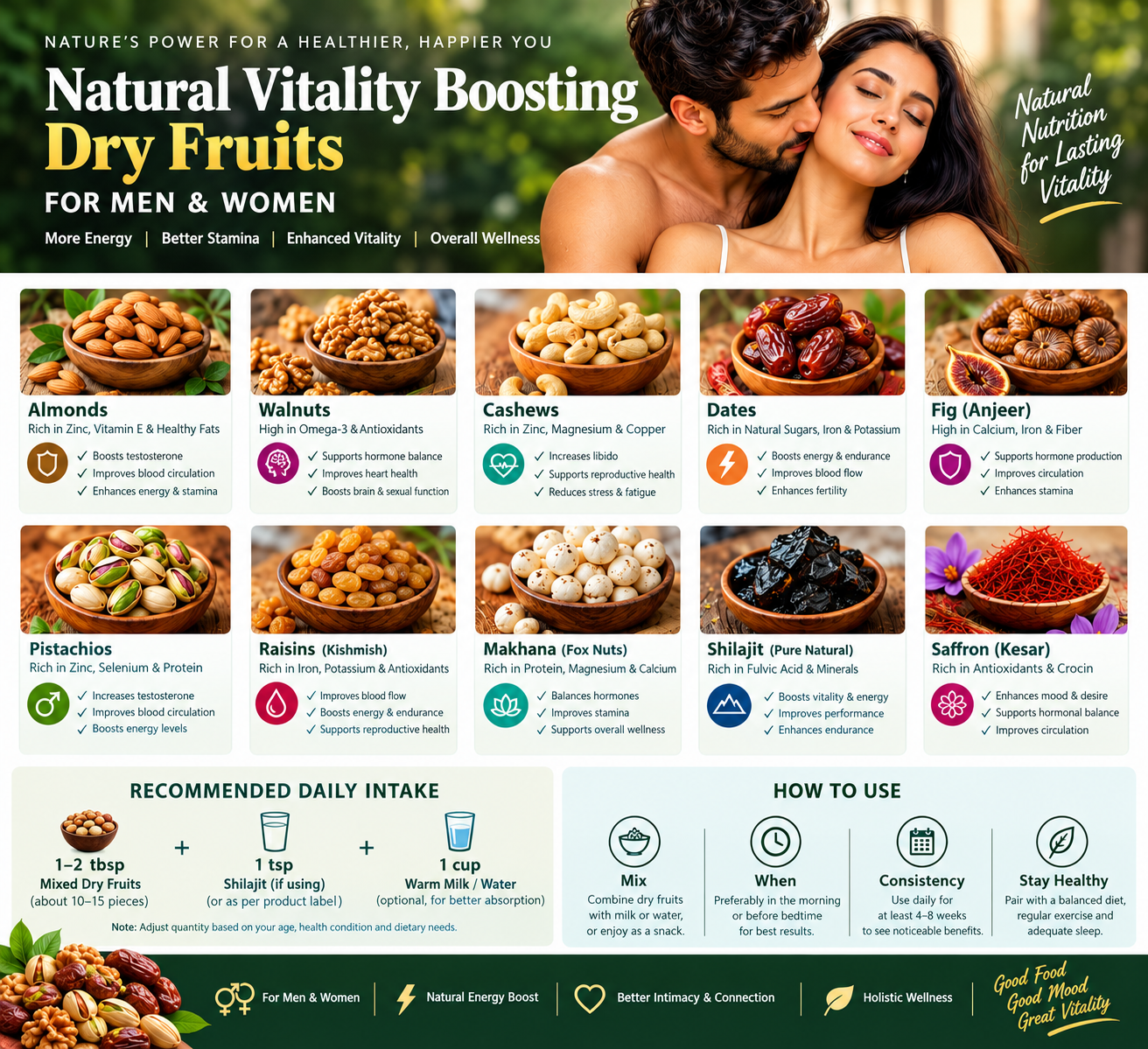
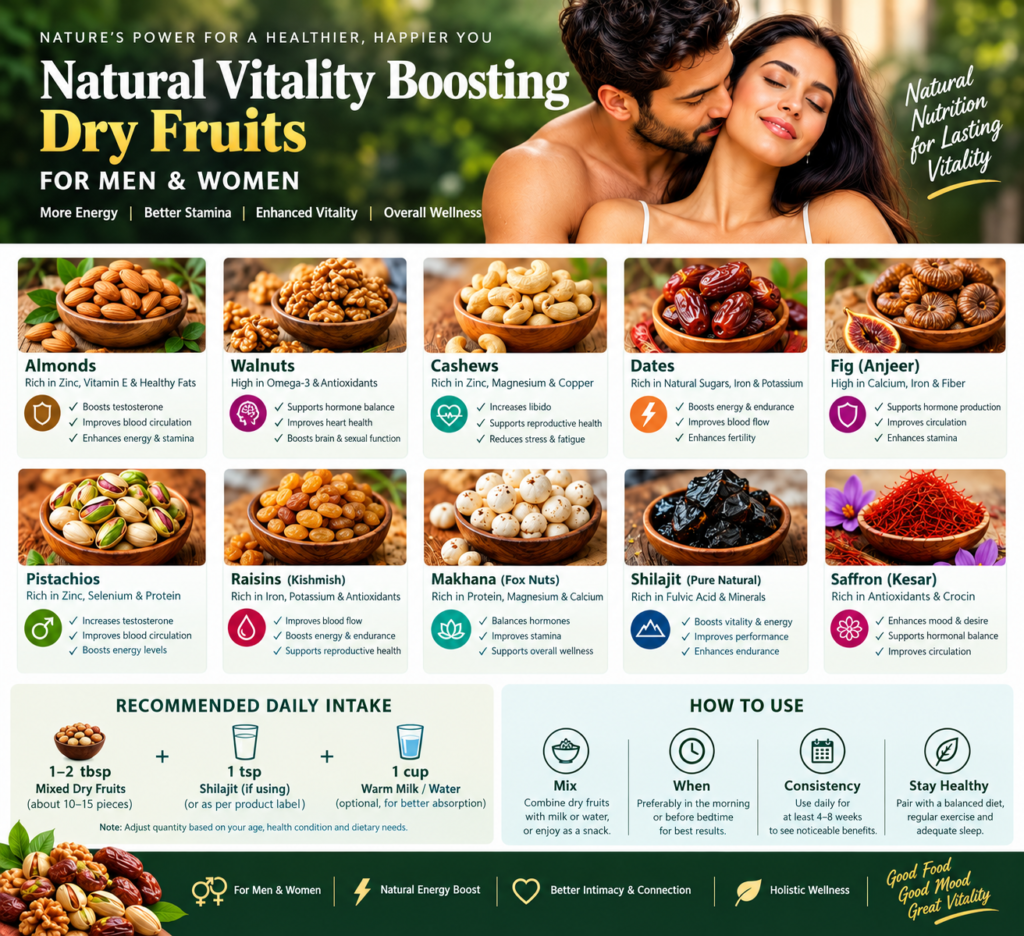
The dry-fruit guide featured in the accompanying Longjack Plus visuals highlights almonds, walnuts, cashews, dates, figs, pistachios, raisins, makhana, saffron and shilajit as foods or natural ingredients associated with nutrition and vitality.
However, it is important to distinguish nutritional support from medical treatment. No single dry fruit can guarantee increased Men power Vitality and fertility. Men’s stamina and vitality health concerns that persist should be discussed with a qualified healthcare professional.
1. Almonds: A Nutrient-Dense Everyday Choice
Almonds provide protein, healthy fats, fibre, vitamin E and minerals. Their combination of nutrients makes them a convenient addition to breakfast or a snack.
For Men’s wellness, their value is best understood as part of an overall healthy eating pattern rather than as an instant herbal-performance food.
A small serving of almonds can be combined with other nuts and seeds to create a balanced daily snack.
2. Walnuts and Healthy Fats
Walnuts are particularly notable for their polyunsaturated fats, including omega-3 fatty acids. Research on nut consumption has also explored reproductive-health outcomes. A systematic review and meta-analysis found that regular nut consumption was associated with improvements in several sperm parameters in some healthy men, although the evidence does not establish that nuts treat infertility.
For Indian diets, walnuts can easily be added to oats, porridge, yoghurt or a mixed-nut bowl.
3. Dates for Energy
Dates naturally contain carbohydrates, making them an energy-dense food. They also provide minerals and fibre.
Because dates contain naturally occurring sugars, portion size matters, particularly for people managing blood glucose or overall calorie intake.
Some clinical research has investigated date-related preparations and women’s vitality function, but this should not be interpreted as proof that ordinary dates are a treatment for herbal performance dysfunction.
4. Cashews for Minerals and Healthy Fats
Cashews provide protein, unsaturated fats and minerals such as magnesium and copper. They can contribute to a nutrient-rich diet when consumed in reasonable portions.
Choose plain or lightly roasted cashews instead of heavily salted or sugar-coated varieties when possible.
5. Figs (Anjeer) for Fibre
Anjeer is a popular Indian dietary choice and provides fibre, minerals and naturally occurring carbohydrates. It can be eaten after soaking or incorporated into breakfast and snack recipes.
Rather than thinking of figs as a standalone “herbal performance booster,” consider them one component of a broader diet supporting digestion, energy and general wellbeing.
6. Pistachios
Pistachios provide protein, healthy fats, fibre and minerals. Their nutrient profile makes them useful for people trying to replace highly processed snacks with more wholesome alternatives.
For everyday wellness, a modest serving of unsalted pistachios can be paired with fruit or yoghurt.
7. Raisins (Kishmish)
Raisins are concentrated dried grapes containing carbohydrates and minerals. They are convenient, portable and commonly used in Indian foods.
Because drying concentrates the natural sugars, moderation is important. A small serving can add sweetness to oatmeal, yoghurt, kheer or a homemade trail mix without relying on highly processed snacks.
8. Makhana (Fox Nuts)
Makhana has become increasingly popular as a light Indian snack. It can be dry-roasted and seasoned with modest amounts of spices.
Its role in men’s wellness is indirect: it can help form part of a balanced eating pattern when it replaces heavily fried or ultra-processed snacks.
The Indian National Institute of Nutrition’s dietary guidance specifically encourages healthier food swaps and lists nuts and seeds as alternatives to deep-fried snacks.
9. Saffron (Kesar)
Saffron has a long history in traditional food and wellness practices and contains bioactive compounds such as crocin and safranal.
There is also clinical research examining saffron and herbal performance function. A systematic review and meta-analysis involving men and women reported a positive effect on measures of stamina vitality dysfunction, but the authors noted limitations and called for further research.
Another review examining male erectile dysfunction found potentially positive effects while noting methodological limitations and inconsistent findings concerning semen parameters.
Therefore, saffron should be viewed as a culinary ingredient with emerging research—not as a guaranteed men’s wellness-performance treatment.
10. Shilajit: Understand the Difference Between Food and Supplement
Shilajit appears in the supplied visual as a natural ingredient alongside dry fruits. However, unlike almonds, walnuts or dates, shilajit is not a conventional dry fruit.
It is generally marketed as a dietary supplement or traditional wellness ingredient. Product quality, purification, dosage and contamination are important considerations. Anyone considering shilajit supplementation should check the product label and consult a healthcare professional when appropriate, particularly if they take medicines or have an existing medical condition.
How Much Dry Fruit Should You Eat Daily?
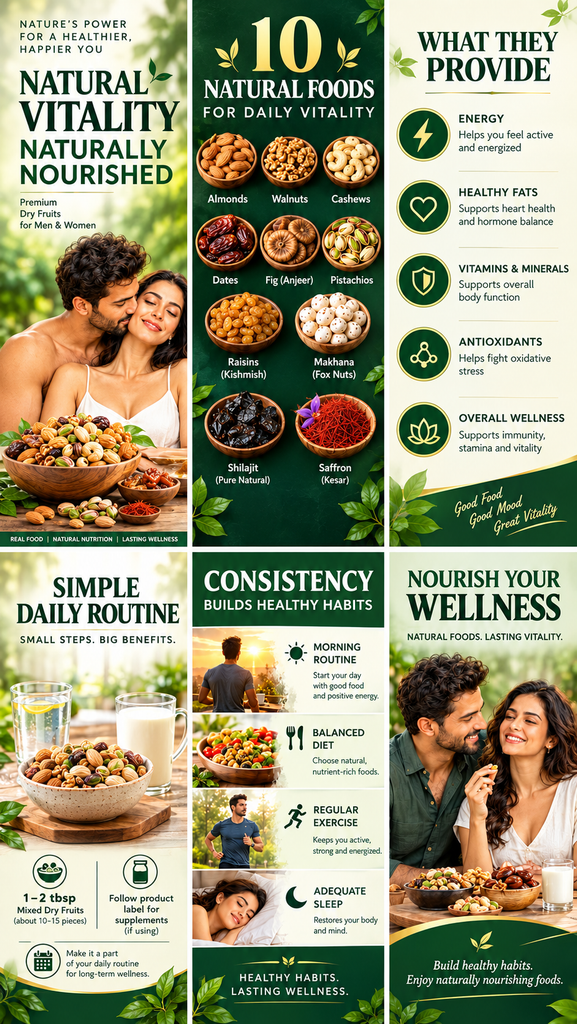
A practical approach is to focus on portion control and variety rather than consuming large quantities of every item shown in the infographic.
For example, a mixed serving might include a few almonds, walnuts, pistachios and cashews, with a smaller quantity of dried fruits such as raisins, dates or figs.
The exact amount should depend on age, activity level, total calorie requirements and individual dietary needs.
The accompanying visual suggests 1–2 tablespoons of mixed dry fruits, while its supplement guidance should not automatically be treated as a universal medical recommendation.
A Simple Daily Routine
Try this simple pattern:
Morning:
A balanced breakfast with a small serving of nuts and fruit.
Midday:
Adequate water, vegetables, whole grains and a protein-rich meal.
Evening:
Choose roasted makhana or a modest portion of unsalted nuts instead of highly processed snacks.
Lifestyle:
Regular physical activity, adequate sleep and stress management are equally important.
The ICMR-NIN dietary guidance emphasizes balanced food choices and healthier substitutions rather than relying on individual “superfoods.”
Can Dry Fruits Improve Men’s Vitality?
They can support the nutritional foundation of a healthy lifestyle, but they should not be presented as guaranteed treatments for low libido, erectile dysfunction, infertility or hormonal problems.
Men’s wellness involves multiple factors—including cardiovascular health, metabolic health, psychological wellbeing, sleep, exercise and relationships.
If you experience persistent erectile difficulties, substantially reduced libido, fertility concerns, pain or other wellness-health symptoms, professional medical evaluation is more appropriate than simply increasing a particular food.
Final Takeaway
A colourful bowl of almonds, walnuts, cashews, dates, figs, pistachios, raisins and makhana can be an enjoyable way to add nutrient-dense foods to an Indian diet. Saffron and shilajit may also be considered separately, with appropriate attention to evidence, product quality and individual suitability.
The goal should not be to search for one miraculous men’s wellness-health food. Instead, build sustainable habits around balanced nutrition, regular exercise, adequate sleep, stress management and appropriate healthcare.
For adults seeking natural approaches to men’s wellness, the best starting point is a healthy lifestyle supported by evidence-based nutrition—not exaggerated promises about instant performance or guaranteed results.
This article is for educational purposes only and is not medical advice. Individual nutritional and supplement requirements vary. Consult a qualified healthcare professional for persistent herbal performance-health, fertility or other medical concerns.